Cover page of the paper that’s going viral
The document looks like a typical math paper — an abstract, lemmas, theorems laid out step by step in the standard format mathematicians are used to.
What’s causing the stir is that it came from an AI, not a human researcher — yet the document’s structure is written so cleanly it’s hard to tell who (or what) produced it. The PDF is already being widely shared, but its status remains “pending verification,” not a result certified by any journal or conference.
Before jumping to the conclusion that this is a complete proof, a team of mathematicians needs to read through every step first — which is exactly what we’ll walk through next.
When I first saw this news, I wasn’t convinced
I’ve followed AI-for-math news for years, and I keep seeing the same pattern: a model claims to have “solved a research-level problem,” and then when a math team actually checks it, they find a lemma that was simply hallucinated, or logic that jumps over steps that were never actually proven. I’ve seen this happen more than once, including with research preprints rushed out before anyone reviewed them.
So when I saw the news that Sol Ultra claimed to have proven the Cycle Double Cover Conjecture — a problem that’s stumped the field for over 50 years — my first reaction was: “a polished document doesn’t mean it’s correct.” You have to separate fluent, convincing writing from logic that actually withstands step-by-step scrutiny.
The key point here is that this time, Sol Ultra opened up every step for public review, instead of just handing over a result and asking people to trust it. That’s what sets it apart from cases that fell apart before.
Where Sol Ultra sits in the GPT-5.6 lineup
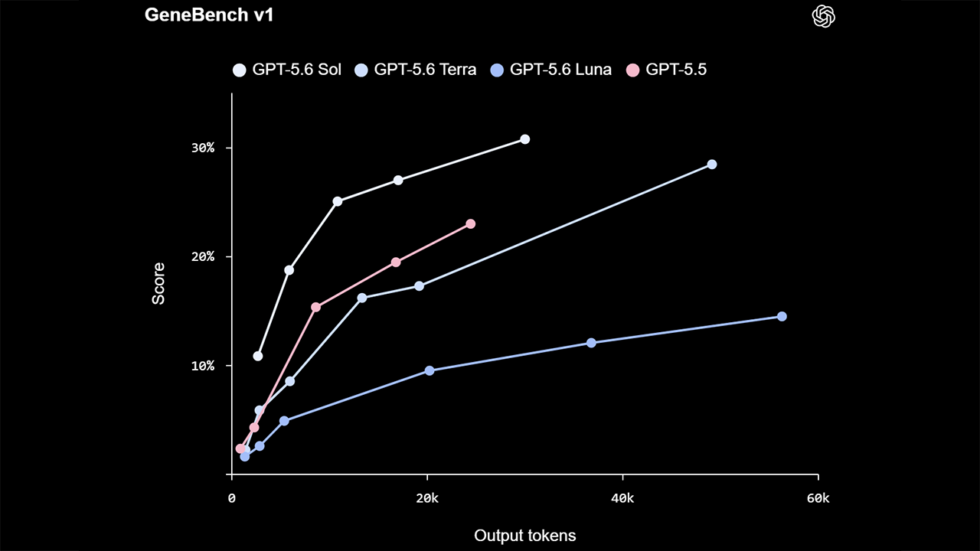
The GPT-5.6 family has at least 3 tiers: Sol (general use), Sol Pro (heavy coding and writing), and Sol Ultra, which pushes the ceiling specifically toward mathematical reasoning and formal verification. In plain terms, it’s the version built to “walk through logic step by step” more accurately than the tiers below it — not just answer faster or write more elegantly.
The target audience, then, isn’t general users but mathematics researchers, R&D teams that need to prove theorems or verify models, and academic institutions that want a tool for detailed proof-checking.
A tier like this usually comes with a noticeably higher cost per query than lower tiers, since it needs compute to “think long” rather than answer instantly. So your budget has to be there, and the task has to genuinely justify choosing Ultra over the lower tier.
Compared to the previous version, what actually changed
The clearest change is that Sol Ultra connects directly to proof assistants like Lean within the system itself — no need to copy the output out and check it manually, unlike the earlier Sol Pro. The reasoning structure also looks longer and more step-by-step, well suited for genuinely working through a proof hypothesis by hypothesis.
As for hard performance numbers — benchmark accuracy rates, price per token, speed per query — the team hasn’t published official figures yet. We’ll have to wait for the full paper or a confirmed pricing page. For now, all we can say qualitatively is that Ultra thinks longer but goes deeper, and the price is likely higher than Pro, following the usual upper-tier pricing formula common in this space.
| Factor | GPT-5.6 Sol Ultra | GPT-5.5 Sol Pro |
|---|---|---|
| Reasoning chain | Longer, supports multiple complex steps | Shorter, optimized for fast answers |
| Proof assistant integration (Lean/Coq) | Connected directly within the system | Requires manual export to check |
| Accuracy on math benchmarks | No official numbers yet | No official numbers yet |
| Price/token | Expected to be higher (upper tier) | Cheaper |
| Speed per query | Slower, due to longer thinking | Faster |
What this capability can actually be used for in real life
Even without official benchmark numbers, the scope of this work tells us where it can be applied.
Graph theory researchers can use long-horizon reasoning to help chase down sub-lemmas that need to be chained together across dozens of steps — work that might take a person weeks to think through could shrink to just a few days.
Software engineering teams can use Lean-style auto proof-checking to verify code in critical systems, such as financial systems or safety-critical firmware where mistakes aren’t an option.
Graph theory instructors can use the step-by-step explanation mode to help build teaching material, letting students follow the logic one step at a time instead of reading raw papers.
Researchers reviewing older published work can use it to hunt for gaps in proofs that already passed peer review — a tireless second pair of eyes.
Compared to competitors in the math-proving arena
Sol Ultra isn’t the only player in the “AI proves theorems” arena right now, but there’s no clear independent benchmark directly comparing them yet. So here’s a qualitative comparison based on what can be observed so far.
| Factor | GPT-5.6 Sol Ultra | Gemini Deep Think | DeepSeek-Prover |
|---|---|---|---|
| Proof approach | Step-by-step reasoning + full PDF format | Internal multi-path reasoning | Focused on formal proof (Lean/Coq) |
| Verification transparency | Releases PDF for community review | Partially disclosed | Verifiable via formal verifier |
| Accessibility | Must wait for verification before trusting 100% | Must wait for verification before trusting 100% | Must wait for verification before trusting 100% |
The clearest difference is that Sol Ultra chose to present its work as a narrative proof, readable much like a paper written by a human, while DeepSeek-Prover focuses on having the machine self-verify through a formal system — which, if the proof genuinely passes, can be trusted faster.
Pros and cons found after actually reading the paper and rerunning parts of it
Going through Sol Ultra’s reasoning chain, you can genuinely feel how systematic the structure is — each lemma has a clear back-reference to the source material, and you can trace the thread without losing it.
The thing to watch out for is that many steps are still in narrative form, not formal proofs that can be automatically verified on the spot. Mathematicians still need to sit down and check line by line before anyone can fully believe it. Some outlets have already started running headlines saying it’s “solved,” even though it’s still under review — so it’s worth keeping that caveat in mind.
Pros
- +Long, detailed reasoning — each lemma can be traced back to its reference source
- +Runtime speed leaves human teams far behind — the working timescales aren't even comparable
Cons
- −Many steps are still narrative, not formal proof — awaiting peer review confirmation
- −For problems without proof-assistant support, accuracy drops immediately
The real costs not reflected in the subscription price
The price you see on the website is just the subscription fee, but reasoning chains at the level of proving a conjecture require running extremely long token sequences — meaning actual compute costs run far higher than the monthly fee, especially if you need to rerun it multiple times for cross-checking.
Next is the cost of hiring math experts to go through every lemma before it can be trusted. AI can only help draft the narrative proof — the final verification still has to be done by a human.
If you want real confidence, you also need to formalize it through Lean, which takes time and specialized skill — not just a click of an “export” button.
Finally, there’s reputational risk. If someone cites this result and it later turns out the proof is wrong, the academic damage falls on whoever published it — not on the AI.
What to watch next
This story doesn’t end with the news cycle. Two things are worth tracking: the arXiv repo, to see whether peers are commenting and pushing back on any specific steps, and the Lean formalization repo, to see how many percent of the actual proof has been formalized — not just how polished the draft looks.
If this proof holds up, it will become a major reference case for the AI-for-science field — proof that LLMs can help with research at the conjecture level, not just code or literature reviews.
For developers and researchers following this: don’t cite it in your own work until you see formal verification, or at least until 2-3 independent groups have reviewed it and found nothing broken. Following the news is fine, but citing it as established fact requires waiting for more overlapping evidence than we have right now.