TL;DR
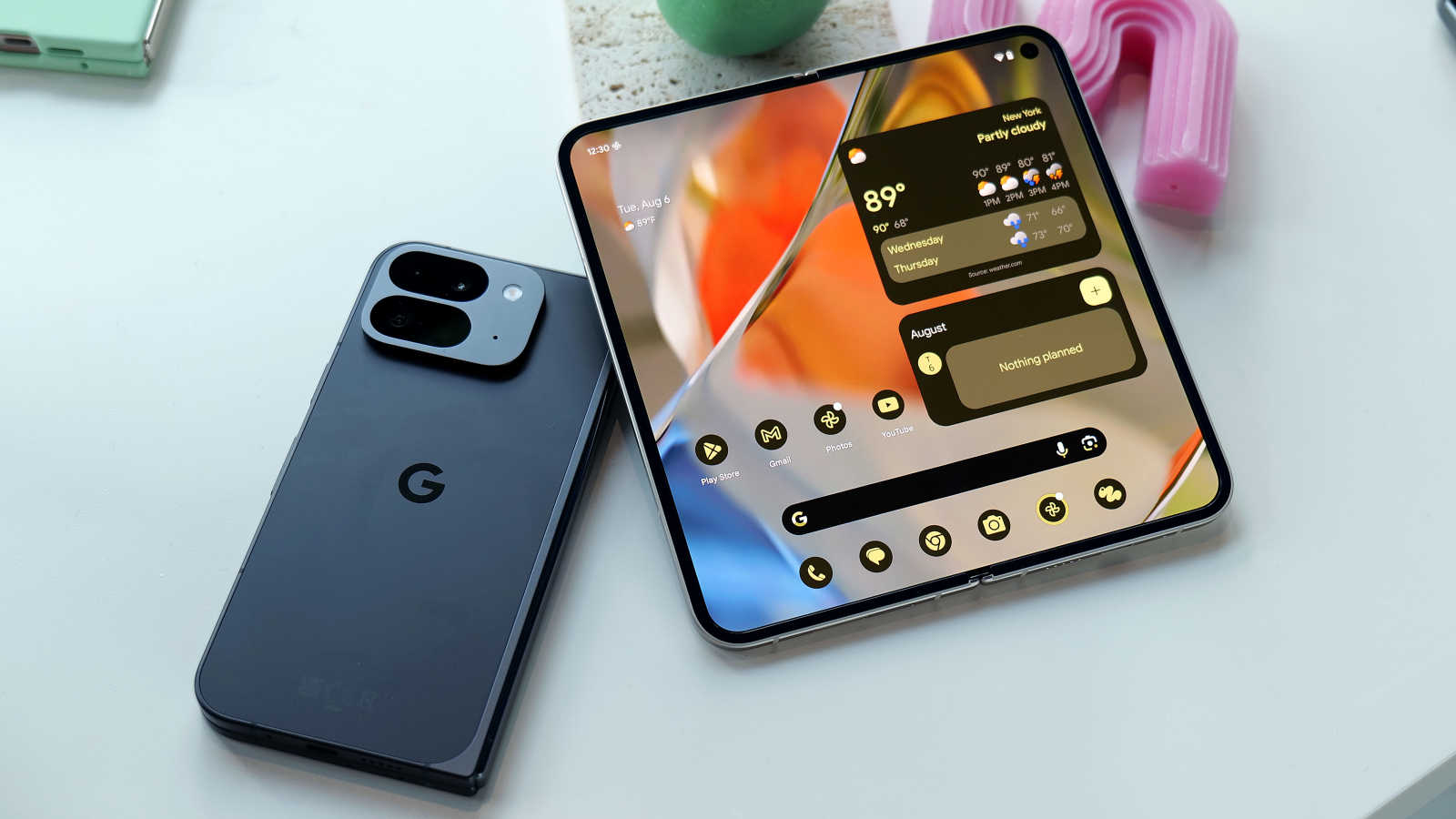
The Pixel 9 Pro Fold is Google’s second-gen foldable — an attempt to fix the original’s shortcomings, though the core issues remain.
The body is noticeably thick and weighs close to 260g; you feel it in your jeans pocket. Camera is improved and shots are crisp, but still short of the iPhone 15 Pro Max. The inner display is bigger and comfortable for video, but the crease is still visible.
Starting at ฿69,900 (~$1,900 USD), it’s expensive. The new AI features are useful but not game-changers. If foldable form factor isn’t a must-have for you, the regular Pixel 9 Pro is better value.
Best for people who want a portable tablet and are happy to pay a premium for new technology.
A Foldable That Changes How You Work
The Pixel 9 Pro Fold completely changed how I use my phone. The 8-inch inner display makes watching Netflix or editing Google Docs feel like using a tablet.
Android 14 multitasking is smooth — you can run up to 3 apps simultaneously, which is genuinely productive on a commute. The 48MP camera delivers sharp shots, but what I really appreciate is using the rear camera for selfies: the quality gap over the front camera is huge.
At 5.1mm thin when unfolded, the grip is comfortable, but at 257g you start to feel it during longer sessions. If you regularly need a big screen for work, the value proposition holds — but if you’re mostly scrolling social media, it’s overkill.
Why a Foldable?
Honestly, I used to think foldables were just novelty. Then I started working outside more often, and reading Excel or Google Sheets on a 6.2-inch screen became genuinely painful — constant pinch-to-zoom.
On the BTS commute, watching video or YouTube on a small screen is frustrating, and reading PDFs means endless scrolling.
A foldable makes a real difference for remote workers or heavy content consumers. It’s an investment that pays off when you need a large screen on the go without hauling a separate tablet.
Where the Pixel 9 Pro Fold Sits in the Pixel Lineup
The Pixel 9 Pro Fold is Google’s top-of-the-line for 2024, sitting above the Pixel 9 and 9 Pro. Its foldable screen is the main differentiator; at the spec level it shares the Tensor G4 chip with the Pixel 9 Pro but gets 16GB RAM instead.
Compared to the Pixel 9 starting at ฿22,000 ($600 USD) and the Pixel 9 Pro at ฿30,000 ($820 USD), the Pro Fold demands ฿60,000+ (~$1,650 USD) — nearly double the regular Pro.
Google positions the Pixel 9 Pro Fold as a premium experiment rather than a mainstream daily driver. It’s for early adopters who want new tech and aren’t counting the cost, because right now it’s not something everyone needs.
Compared to the Previous Generation
| Factor | Pixel Fold (1st gen) | Pixel 9 Pro Fold |
|---|---|---|
| Chipset | Tensor G2 | Tensor G4 |
| Outer display | 5.8 in | 6.3 in |
| Inner display | 7.6 in | 8 in |
| Rear cameras | 48MP + 10.8MP + 10.8MP | 48MP + 10.8MP + 10.5MP |
| Weight | 283g | 257g |
| Starting price | ฿53,900 (~$1,480) | ฿60,900 (~$1,670) |
Google improved the Pixel 9 Pro Fold in almost every dimension. The outer screen grew from 5.8 to 6.3 inches — actually usable folded-up now. The inner screen widened to 8 inches, which handles demanding layouts well.
Weight dropped from 283g to 257g, which you notice in hand. The price climbed ฿7,000 (~$192 USD). This upgrade is worth it for people who plan to use it as a daily driver — the outer screen is finally big enough to use as a normal phone.
Standout Features That Work in Real Life
Multitasking on the Pixel 9 Pro Fold is excellent. Drag apps side by side in split screen: YouTube running while you reply on LINE, or Google Docs open alongside Chrome for research.
Circle to Search works on both inner and outer screens — hold and circle anything on screen to search it. Spot a shirt while shopping and find where to buy it instantly.
The inner-screen front camera gives unusually wide selfie angles. Prop it up, set a timer, and get group shots without asking a stranger.
Gemini AI handles work email drafting, summarising long threads, and real-time translation. It integrates across Google services more completely than other AI assistants, which makes it genuinely useful rather than a demo.
Competitor Comparison
| Factor | Pixel 9 Pro Fold | Samsung Galaxy Z Fold 6 | OnePlus Open | Honor Magic V3 |
|---|---|---|---|---|
| Price | ฿85,990 (~$2,360) | ฿66,900 (~$1,840) | ฿69,990 (~$1,920) | ฿79,990 (~$2,200) |
| Chipset | Tensor G4 | Snapdragon 8 Gen 3 | Snapdragon 8 Gen 2 | Snapdragon 8 Gen 3 |
| Inner display | 8 in | 7.6 in | 7.82 in | 7.92 in |
| Weight | 257g | 239g | 239g | 226g |
| Battery | 4,650 mAh | 4,400 mAh | 4,805 mAh | 5,150 mAh |
The Pixel 9 Pro Fold is the most expensive of the group, but gets you the largest inner display and the most capable Gemini AI integration. Samsung wins on ecosystem and S Pen support. Honor is the lightest and has the biggest battery.
If your budget is under ฿70,000 (~$1,920 USD), the OnePlus Open or Galaxy Z Fold 6 offer better value. If you’re deep in the Google ecosystem, the premium for Pixel is justified.
Pros
- +8-inch inner + 6.3-inch outer display — genuinely usable on both sides
- +Gemini AI handles real work: real-time translation, email drafting, summarisation
- +Pixel camera quality and Night Sight remain best-in-class for Android
- +Tensor G4 is battery-efficient with fast on-device AI processing
- +Stock Android, 7-year update guarantee
Cons
- −฿69,900 (~$1,900 USD) — most expensive foldable in its class
- −257g gets tiring in extended one-handed use
- −No S Pen support, limits some multitasking workflows
- −Tensor chip still trails Snapdragon 8 Gen 3 in raw performance
- −Thermal management is average — extended gaming gets warm
The Pixel 9 Pro Fold suits heavy Google-services users who want AI assistance and shoot a lot. On raw spec-per-baht, the Galaxy Z Fold 6 wins.
It feels like Google priced this high for the Thai launch; expect it to drop next year.
Hidden Costs
Budget an extra ฿5,000–8,000 ($140–220 USD) after buying the hardware. A Fold-specific case runs ฿1,500–2,500 ($41–69 USD) — more expensive than a standard case because it has to protect two screens. Inner screen protector is another ฿1,200 (~$33 USD).
Google Care+ extended warranty is ฿3,990/year ($110 USD) — buy it. Inner screen repair without coverage costs ฿25,000–30,000 ($690–820 USD), the price of a mid-range phone on its own.
Google One 100GB storage is ฿65/month ($1.80 USD); AI photo features quietly disappear without it. YouTube Premium is ฿179/month ($5 USD) for some features that require it.
Total first-year cost is ฿80,000–90,000 (~$2,200–2,470 USD), not just the ฿69,900 sticker price.
Who Should Buy, Who Shouldn’t
Buy it: Business travellers get the most value — the large display handles real work and split-screen multitasking is practical. Photography-focused users benefit from the AI editing.
Skip it: Anyone on a tight budget. Total first-year cost is ฿80,000–90,000 (~$2,470 USD). Rough phone users should avoid it — foldable screens are fragile.
If you don’t multitask heavily or don’t work on the move, a standard flagship is a better use of money. At ฿69,900 (~$1,900 USD), you could instead buy an iPhone 15 Pro Max and an iPad Air.
Final Verdict
The Pixel 9 Pro Fold delivers for people who need maximum productivity and accept the care it requires. ฿69,900 is not a casual purchase.
It’s worth it for early adopters who need a large portable screen, or for workers who multitask daily. For everyone else, wait for the next generation at a lower price.
If you have the budget but aren’t sure you’ll use the foldable format enough to justify it, buy a standard flagship plus a separate tablet. You get two durable devices instead of one delicate one. Don’t buy it to show off; you only find out if it’s worth it by actually using it.