TL;DR: Developer Monty Bichouna trained a small world model called LeWorldModel — a JEPA-style architecture built on ideas Yann LeCun proposed — on a single RTX 3080 Ti gaming GPU. With only about 12.5 million parameters and trained on over 42,000 Pokémon Red frames, the model planned its way to picking a starter Pokémon from Professor Oak’s lab in 52 of 100 attempts, versus zero for random button presses. It has only been tested on that one scenario and still can’t beat the rival trainer.
When One Gaming GPU Became an AI Lab
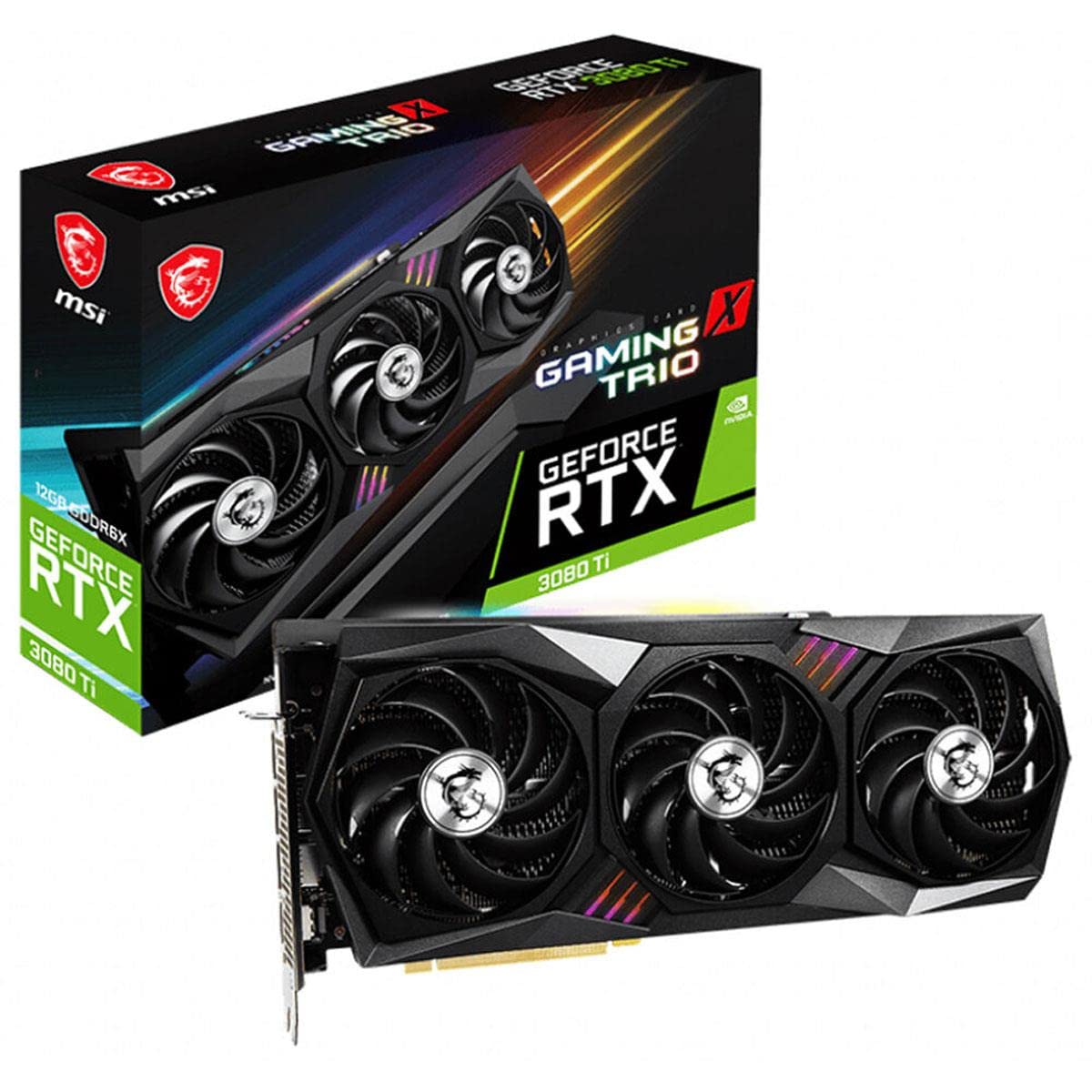
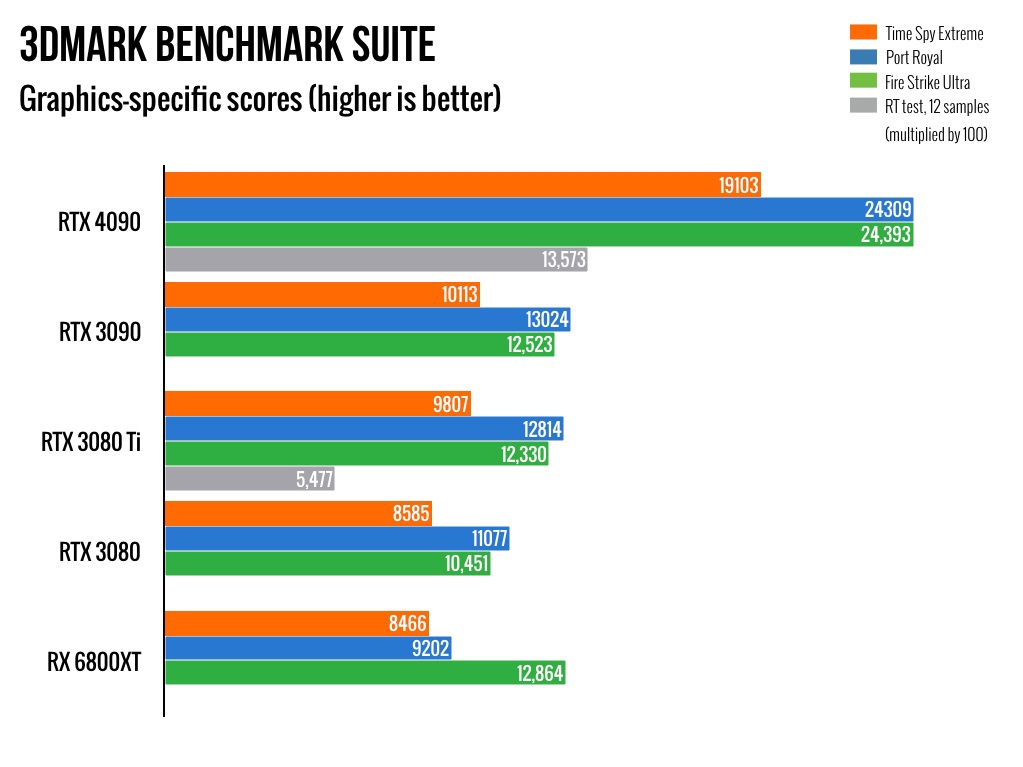
Monty Bichouna picked Pokémon Red, the classic Game Boy title, as a testbed to see how much a small model trained on nothing but a single consumer gaming GPU — an RTX 3080 Ti — could learn from screen images and the outcomes of button presses, without relying on a large training cluster.
What makes the project interesting is that it never aimed to make the AI finish the game. The goal was narrower: prove that a small world model can genuinely predict what happens next from an action, the same kind of reasoning that physical AI and robotics research use to evaluate an environment before acting.
What LeWorldModel Is, and Why This Architecture
The model, called LeWorldModel, is one variant within JEPA (Joint Embedding Predictive Architecture), a framework Yann LeCun proposed. Its defining trait is size: it’s far smaller than most other JEPA variants, small enough to train on a personal machine, with roughly 12.5 million parameters.
Instead of predicting the entire next screen frame pixel by pixel, the model uses an encoder to compress each image into a 192-number embedding, then a predictor estimates how that embedding will change for each possible button press. A planning step built on the cross-entropy method then searches for a sequence of actions likely to reach a goal. The team also added a regularization technique called SIGReg to stop the model’s embeddings from collapsing into meaningless, repetitive outputs.
Training on 42,382 Game Boy Frames Without Telling the Model the Goal
All of the training data came from 42,382 grayscale frames, grouped into 1,009 short trajectories that mixed scripted routes, noisy randomized actions, and pure random movement. The initial training phase was reward-free — the model had no idea what the game’s objectives even were. Goals were only introduced later, at planning time.
A second key technique was “rollout fine-tuning,” where the predictor learns from chains of its own predictions rather than always restarting from a real observation. This helps limit the compounding errors that show up when planning many steps ahead.
The Numbers That Show Real Learning, Not Random Luck
The project’s central test had the model plan its way to picking a starter Pokémon from a save state inside Professor Oak’s lab. Out of 100 plans, 52 succeeded in acquiring a starter, while random button presses succeeded zero times out of 100. That gap is the clearest evidence that the model actually learned the relationship between images and the outcomes of actions, rather than succeeding by chance.
To be fair, the failure rate is still close to half, and this test covered only one scenario with a fixed starting point. The model hasn’t been evaluated on longer sequences of events, and it still can’t beat the rival trainer — so it remains far from “finishing the game,” despite what some headlines might imply.
| Factor | LeWorldModel on one GPU | Rule-based bot | Full Reinforcement Learning | Cloud LLM agent |
|---|---|---|---|---|
| Model size | Very small (~12.5M parameters) | No model, just rule code | Often tens to hundreds of millions of parameters | Billions of parameters or more |
| Training hardware | One gaming GPU | No training needed | Often needs multiple GPUs | Trained on the provider's cloud |
| Transparency | Plans and predictions can be inspected | Clearest of all | Harder to interpret behavior | Depends on the provider |
| Accuracy in the tested scenario | 52% on the starter-selection scenario | High only within the written conditions | Depends on training and time | Depends on the prompt and model |
Strengths and Limitations Seen in This Experiment
Pros
- +Successfully trained a real world model on a single gaming GPU, with no GPU cluster required
- +Small enough to inspect and iterate on quickly
- +Backed by a concrete number showing it beats random chance (52% vs. 0%)
Cons
- −Failure rate is still close to 48%, even in a narrow, fixed-start scenario
- −Not yet tested on longer sequences of events or other parts of the game
- −Prediction errors can compound when planning many steps ahead
The Electricity, Time, and Wear That Don’t Show Up on the GPU’s Price Tag
A project like this doesn’t end with the cost of the graphics card. Running a machine for long, continuous training sessions raises the electricity bill, along with heat and fan noise — good ventilation in the room becomes necessary.
The hardware also wears faster than it would under normal use, from the fans to the power supply, while storage for frame data and checkpoints keeps growing. Add to that the time the developer spends preparing data, tuning the model, and debugging during training. If the same machine also doubles as a work or gaming PC, the opportunity cost becomes obvious too, since it can’t be used for much else while training runs.
From Picking a Starter to Asking How Much the AI Really Understands
What this project demonstrates most clearly is that a small world model can genuinely learn the relationship between images, button presses, and outcomes on hardware ordinary people can access — this isn’t just a theoretical claim. But a 52% success rate on a single test scenario is a plain signal that this is an early step, not proof that small-scale AI understands a game’s rules the way a human does.
The real value here lies in how the result was measured, not in the game itself. Comparing against a random baseline makes it clear exactly what the model did and didn’t learn. The question worth watching next is whether accuracy holds around that same halfway mark once the training data grows and the model is tested on longer sequences of events, or whether it drops off faster than expected.