Planning to Buy a PC or Upgrade RAM Right Now? Here’s What You Need to Know
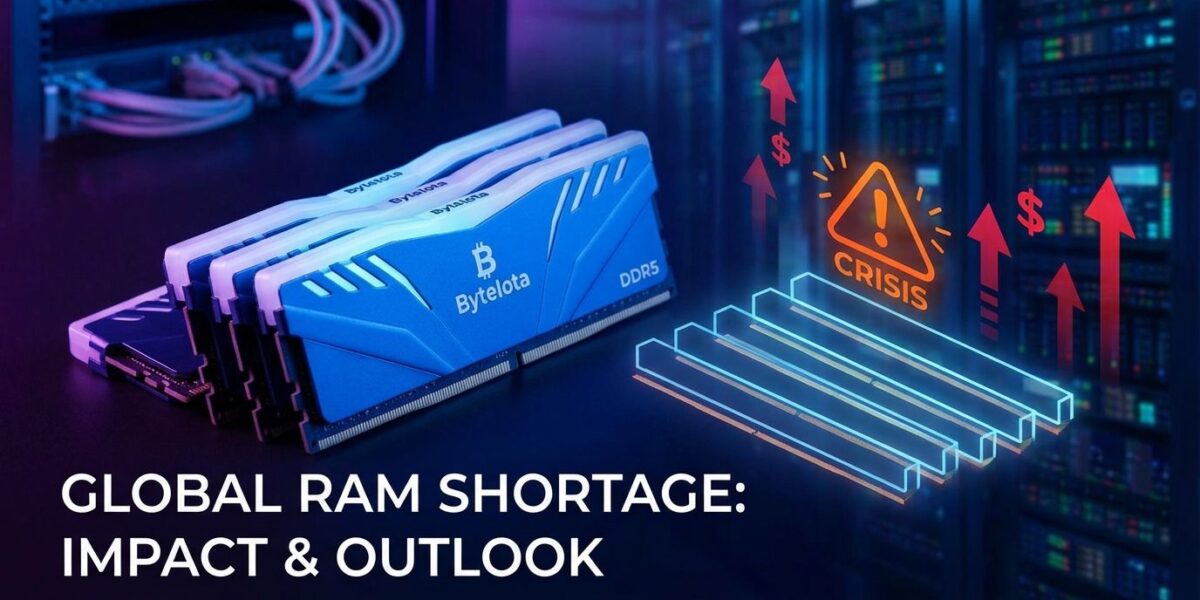
If you’re planning to buy a new computer, build a PC, or upgrade your RAM — the market looks nothing like it did a year ago. DDR5 prices have nearly doubled compared to last year, and supply is tight globally. This article will help you make a better call: when to buy, which spec to pick, and how much budget to add as buffer.
The root cause is that the AI boom has consumed almost all available production capacity, on top of the DDR5 transition requiring completely new manufacturing lines. Even Apple capped the iPhone 17 Pro Max at 12GB RAM to control pricing, while Android flagships are shipping with 16–24GB.
Whether you’re a dev whose machine starts lagging when you open multiple IDEs, a gamer looking to upgrade, or just someone planning to buy a new laptop — the data below will help you time the decision right.
The Situation at a Glance
The impact spans from flagship phones all the way to gaming PCs. AI and data center demand shows no sign of slowing, and production capacity can’t expand fast enough to keep up.
A concrete example: a dev friend tried to upgrade recently because his machine started lagging with multiple IDEs open. He checked RAM prices, and DDR5 32GB that used to run ฿4,000 ($110 USD) was now ฿7,500 ($210 USD). He ended up postponing the whole upgrade.
A lot of people planning a new build right now are running into the same wall — the budget they set isn’t enough anymore, so they’re either downgrading specs or sticking with the old machine and aggressively closing Chrome tabs. Small companies are delaying server upgrades too because IT costs have spiked.
This affects everyone buying new hardware: gamers, content creators, or someone who just wants a decent laptop.
Where the RAM Crisis Came From
The root cause is the AI boom — everything needs AI and ML now, and that’s sent RAM demand through the roof. Memory chip fabs in Korea and Taiwan are booked out by tech giants first, so consumer prices follow. On top of that, the DDR5 transition requires entirely new production lines, which tightens supply further. This shortage is likely to drag on for 2–3 years until new fabs come online.
Comparing This to the Last Crisis
| Factor | RAM Crisis 2017-2018 | Current RAM Crisis |
|---|---|---|
| Primary cause | cryptocurrency mining | AI boom + DDR5 transition |
| Duration | 18 months | Expected 2–3 years |
| Price increase | 200–300% | 150–250% |
| Impact scope | gaming + mining | all tech devices |
Last time it was crypto miners clearing the shelves. This time it’s AI companies and the DDR5 transition. This round is worse because it hits every device category, not just PCs.
The key difference: AI demand compounds over time. It doesn’t cycle up and down like crypto did, which makes this much harder to resolve.
Real-World Impact
The hardest-hit users are streamers and content creators. Gamers running OBS, Discord, and a few browser tabs alongside a game — 16GB isn’t enough anymore, 32GB is the new floor, and prices are up. Video editors are feeling it too: 4K footage is RAM-hungry, and running After Effects alongside anything else kills system responsiveness. Remote workers with Zoom, Slack, and multiple browser tabs open are noticing the slowdown.
This year, if you’re a heavy user, you need to either budget for a RAM upgrade or tighten your workflow to reduce memory pressure — before prices climb further.
Comparing Available Options
| Factor | Samsung DDR5 | SK Hynix DDR5 | Micron DDR5 |
|---|---|---|---|
| Price per GB | +25% | +30% | +20% |
| Speed | 6400 MHz | 6400 MHz | 5600 MHz |
| Availability | Scarce | Very scarce | Some stock |
Every brand has gone up, but Micron is still easier to find. Samsung and SK Hynix offer better performance but are hard to source.
If you need to upgrade now, go with Micron — cheaper and still in stock. Wait for things to stabilize before hunting for high-end modules. On the LPDDR5 side, mobile RAM prices have moved too, which is why flagship phones across all brands are more expensive this year.
The Trade-offs
Pros
- +Cheap, low-spec RAM disappears from the market — buyers end up with better-specified machines
- +RAM manufacturers earn more and can invest more in R&D
- +Consumers are paying more attention to performance rather than just the lowest price
Cons
- −Laptop and smartphone prices up an average of 15–20%
- −Higher infrastructure costs for SMEs and startups
- −Technology is less accessible to budget-constrained buyers
This is a double-edged situation. People with budget get better hardware. People without budget keep using the old machine. Long-term the industry comes out stronger, but short-term consumers absorb the cost. If you’re about to buy, add 20% to what you budgeted.
Hidden Costs to Factor In
Beyond the higher sticker price, there are indirect costs: if you extend the life of an old machine while waiting, repair costs and electricity bills creep up over time.
For businesses, delayed projects and using lower-tier technology directly hits productivity. Developers end up spending time optimizing apps to use less RAM — time that could go to building things instead.
The opportunity cost is the biggest number. Waiting for better technology means moving slower competitively. Build a Plan B around current availability rather than holding out for peak specs.
What to Do: Buying Advice
Made for
- Building a new PC or buying a laptop now — budget 20–30% more for RAM than you originally planned
- Upgrading RAM because your machine is genuinely lagging — buy now, prices will be higher in 6 months
- Dev / Creator who needs 32GB+ — don't wait, buy Micron DDR5 while it's still in stock
Think twice
- Tight budget but need a new machine — go 16GB and pick a motherboard with spare slots for a later upgrade
- Startup planning a server purchase — consider mid-range DDR5 or wait for Micron restock
Skip this one
- Your current machine runs fine — no need to rush, prices should be better by late 2026
- Light users: browser + Office only — 8GB is still workable, no upgrade needed yet
Summary — practical guidance for buyers:
- Buy now if your current machine has real problems (lag, crashes, constantly hitting RAM ceiling) — prices won’t drop in the next 6–12 months; buying now is cheaper than buying later.
- Match spec to need — don’t chase maximum RAM if you don’t need it. Right now 16GB for general work, 32GB for heavy tasks, is the best value point.
- Leave room to expand — if building a PC, get a motherboard with 4 DIMM slots, populate 2 now, and add more later when prices fall.
- Watch prices mid-year — if you’re not in a rush, there may be temporary reprieves as Samsung/SK Hynix production cycles deliver new batches.
- Wait it out if your machine is still running fine — late 2026 should bring both better options and better prices.
Looking Ahead: When Does This Ease Up?
The shortage looks likely to stretch into late 2026, based on how long it takes Samsung and SK Hynix to build and bring new fabs online. There may be brief windows of improvement, but persistent AI server demand will keep pressure on throughout.
Enterprises should maintain at least 6 months of buffer inventory and line up alternative suppliers. OEMs need roadmaps flexible enough to accommodate component availability uncertainty.
For individual buyers: no need to panic, but if you’re planning an upgrade next year, start tracking prices from mid-2025. The situation will normalize — it just takes time.