TL;DR
The direct answer: if you’re in Thailand, there’s no rush to scan — Orb coverage in Thailand is essentially nonexistent. Most active locations are in Japan, the US, and a handful of European cities that haven’t been banned yet. What’s actually interesting is that Tinder just announced a global rollout of the Verified Human badge tied to World ID, following a successful Japan pilot. The announcement came at the Lift Off event on April 17, 2026.
The honest reality: not everyone should stare into the Orb before a date. Iris is a biometric you can’t change. And on the other side, several countries have already banned Worldcoin — Kenya (High Court ruling May 2025 ordering data deletion), Spain, Germany (GDPR), Indonesia (May 2025) — with investigations still open in Hong Kong, Portugal, France, Argentina, Brazil, and the UK.
The Actual News: Tinder + World ID + Visa
Before getting to the Orb, you need the full context. This isn’t just Sam Altman launching a new gadget — it’s Match Group (owner of Tinder, Hinge, OkCupid) deciding to use World ID as the identity layer across its dating apps.
Timeline:
- Late 2025: Tinder starts a Japan pilot, partnering with MEDIROM to deploy Orb stations at over 3,000 retail locations nationwide
- April 17, 2026 (Lift Off event): Global rollout announced — US and other markets start seeing the Verified Human badge on profiles
- Other deals in the mix: Visa launches The World Card for spending digital assets anywhere Visa is accepted, Stripe joins as payment rails, Zoom and DocuSign use World ID to verify the other party is a real human, not a deepfake
Tinder’s incentive for users: linking World ID gets you 5 free Boosts (the feature that pushes your profile to the top of the queue for ~30 minutes, normally paid). This is clearly an adoption campaign, not a mandate.
Sam Altman’s pitch boils down to one line — “We’re entering an era where AI-created content outnumbers human-created content.” The implication: we need a way to prove there’s a human on the other side. Dating apps flooded with bots and fake photos are the most obvious first use case.
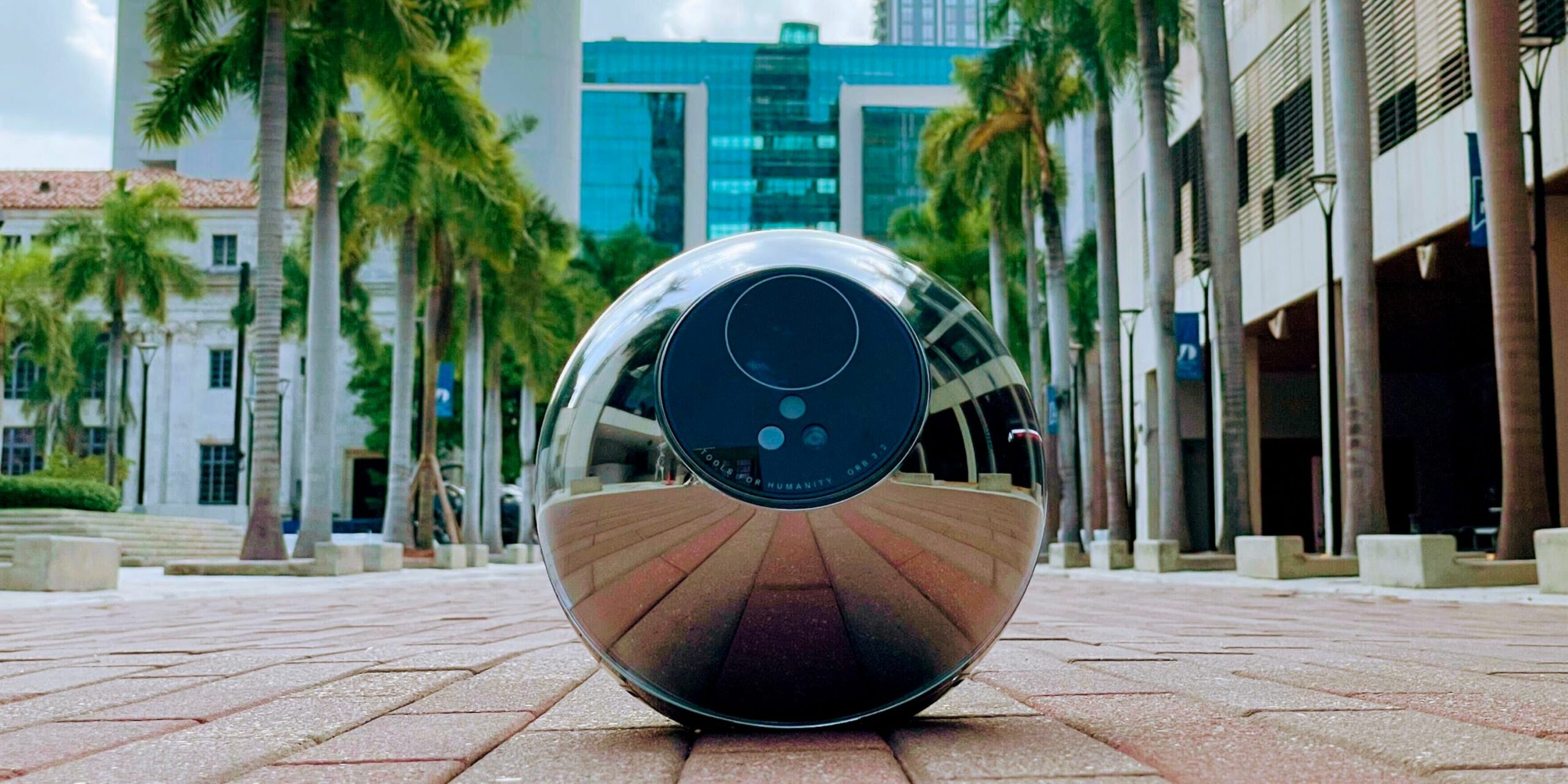
What the Orb Actually Is — Not a Laser, Despite What People Think
Straight up: the Orb is not a laser blasting your retina. The main sensors are infrared cameras and LEDs, plus visible LEDs for guidance. There is no laser beam of any kind.
Specs from world.org’s engineering documentation:
| Spec | Value |
|---|---|
| Weight | ~2.8 kg |
| Materials | 2mm transparent shell + white chrome case with copper ring |
| Cameras | 2 (wide-angle + telephoto ~5° FOV on 2D gimbal) |
| Light sources | 79 infrared LEDs (740nm, 850nm, 940nm) + visible LEDs for guidance |
| Anti-spoof | IR wide-angle camera + 3D time-of-flight + thermal camera |
| Compute | Nvidia Jetson Xavier NX + STM32 |
| Scan time | ~10 seconds |
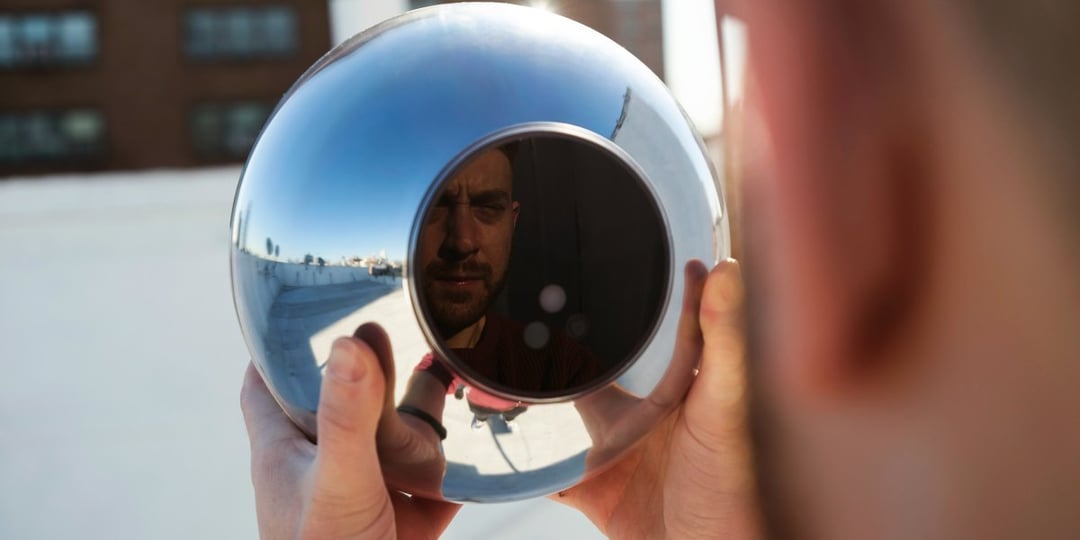
Actual flow: an operator positions you about 20–30 cm from the Orb, you look straight in, the system snaps IR images of your iris and processes them on-device. No raw image is uploaded to the cloud. What comes out is an iris code — a hash derived from your iris pattern, then encrypted with a public key from the server.
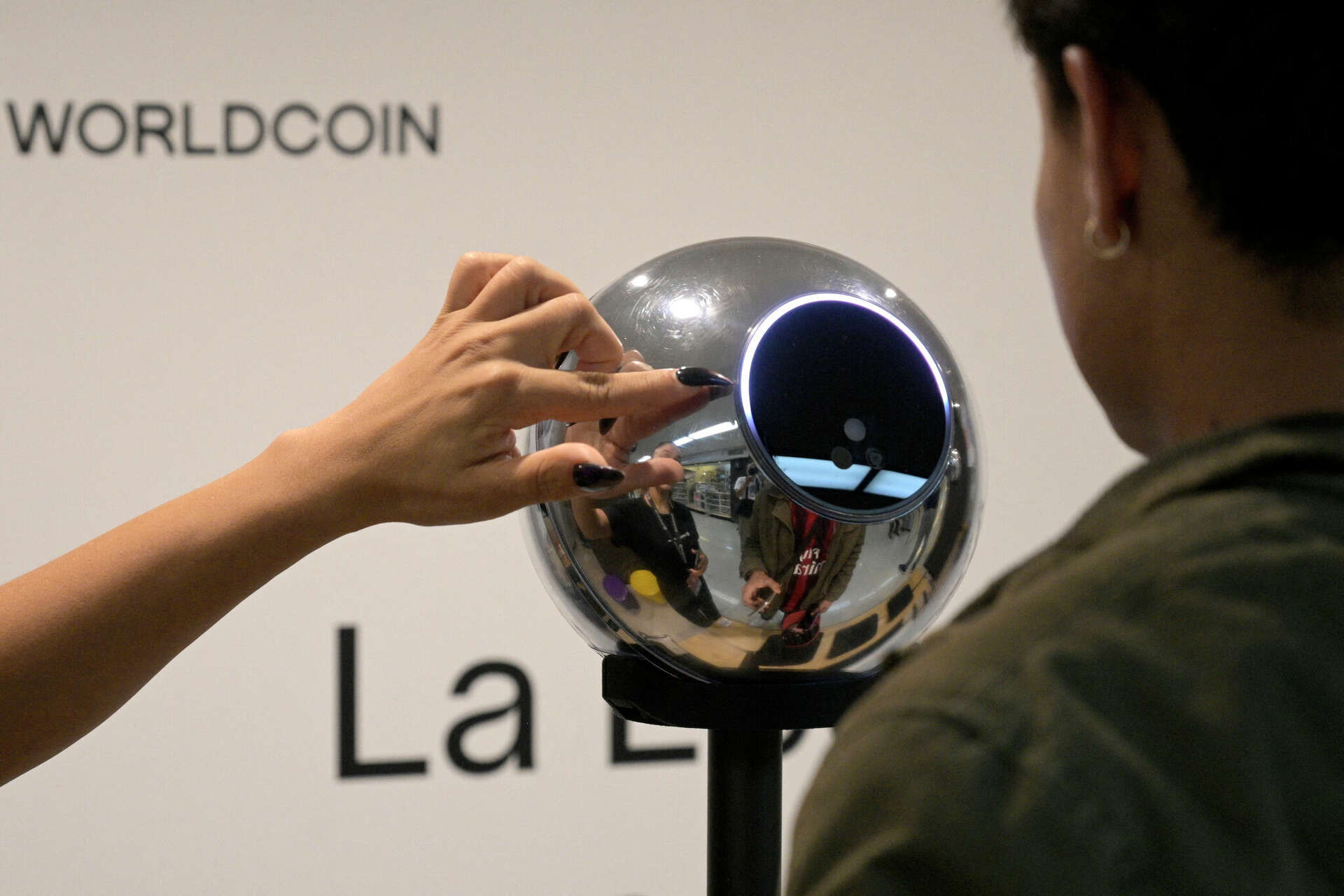
Important distinction: an iris code hash does not mean “no personal data collected.” Iris data is biometric data under GDPR and most modern privacy law. A hash is still personal data. This is exactly why regulators in multiple countries have rejected World’s explanation on this point.
Countries That Have Banned Worldcoin — Don’t Gloss Over This
Most coverage skips past this, so let’s be explicit.
- Kenya — May 5, 2025: The High Court (Justice Roselyne Aburili) ruled that Worldcoin’s operations violated the Data Protection Act. Ordered all iris and facial data of Kenyan citizens deleted within 7 days.
- Spain — AEPD (Spain’s data protection authority) ordered data deletion; Spain’s Supreme Court upheld a temporary ban on iris scanning.
- Germany — Regulator completed its investigation, concluded GDPR violations, ordered all biometric data deleted.
- Indonesia — May 4–5, 2025: Ministry of Komdigi suspended all operations, citing failure to properly register as an Electronic System Organizer and use of a different company’s license.
- Under investigation: Hong Kong, Portugal, France, Argentina, Brazil, UK
If your country has no Orb locations and you’re thinking of flying somewhere to scan, verify that destination is still operational. “International scanning is available” doesn’t mean the country you’re traveling to hasn’t banned it.
How Much Does Verified Human on Tinder Actually Help?
Is fake-profile pollution in dating apps a real problem? Yes. Anyone who’s used Tinder or Bumble knows: photos that are 5–10 years old, heavy filters, catfishing throughout — and in 2026, cheap AI avatars are making bot profiles harder to spot.
World ID solves exactly one dimension: “the other person is a unique human who hasn’t re-registered under a new identity.” It does not solve “the profile photo is the same person who scanned.” Tinder doesn’t link the iris to photos in the app — that would require a face-matching system even more invasive than this.
So the Verified Human badge tells you “this account belongs to a real, non-duplicate person.” It doesn’t tell you whether the face in the photos matches the person who scanned. Someone could scan the Orb and then swap in a celebrity photo. The badge stays.
Bottom line: effective at filtering bots, partially effective against catfishing. If you need photo authenticity, you still have to video-call.
Comparison with Other Identity Verification Options
| Factor | World ID (Orb) | Clear | NDID (Thailand) |
|---|---|---|---|
| Verification method | Iris scan + iris hash | iris/face/fingerprint + docs | National ID card + bank data |
| Enrollment time | ~10 seconds per scan | ~5 min + in-person visit required | 10–30 min via banking app |
| Annual cost | Free + earn WLD tokens | $209/year (Plus) | Free (via bank) |
| Coverage | Select countries (banned in several) | US only | Thailand only |
| Data held | Iris code hash on-chain | Biometric data on company servers | National ID + KYC data |
Clear’s current price is $209/year for Plus (check their membership page directly) — not $179 as commonly copy-pasted across articles. The key difference: Clear is a single company’s closed system in one country. World ID claims to be an open protocol.
NDID is Thailand’s national digital identity framework, already embedded in every major mobile banking app. Thais use it to open accounts and run cross-bank e-KYC. It’s easier to understand and doesn’t require staring into any orb.
Who Actually Benefits vs. Who’s Just Taking on Risk
Made for
- Frequent Japan/US travelers who already actively use Tinder or World ID-supported dating apps
- Crypto users already in the WLD/World App ecosystem who understand the risks of on-chain biometric data
- Developers or researchers who want to hands-on test a proof-of-personhood system
Think twice
- Thailand-based users with no travel plans — waiting for signals from Thailand's PDPC (Personal Data Protection Committee) is still a reasonable call
- Casual Tinder users — the Verified Human badge isn't a deal-breaker at this stage
Skip this one
- Anyone residing in or holding citizenship from countries that banned Worldcoin (Kenya, Spain, Germany, Indonesia) — recourse after scanning is extremely limited
- Anyone uncomfortable with biometric data hashed and stored on-chain permanently — iris is immutable, lose it once and it's gone
- Privacy-first users — NDID or Thai bank e-KYC carries lower risk in a Thai context
Pros and Cons Before You Decide
Pros
- +Genuinely filters bots from dating apps — especially useful for Match Group's use case
- +Iris code is hashed + encrypted on-device; raw image never uploaded to cloud
- +Protocol uses zero-knowledge proofs: verifies 'this person scanned' without revealing who they are
- +Real incentives — WLD tokens + 5 free Boosts on Tinder
Cons
- −Iris is an immutable biometric — leak or re-identification means permanent damage
- −Banned or ordered deleted in multiple countries (Kenya, Spain, Germany, Indonesia) — high regulatory risk
- −No meaningful Orb footprint in Thailand — requires flying abroad
- −Verified Human confirms you're human, not that your photos match your face — catfishing persists
- −WLD token value is crypto-volatile — not reliable baseline income
Answering the Title: Should You Stare Into the Orb Before Your First Date?
Honest answer between friends — not yet, for most people in 2026.
Three reasons:
- No real Orb coverage in Thailand — Flying to Japan to get a Verified Human badge on Tinder doesn’t make economic sense unless you’re already going there.
- Regulatory picture is still unstable — Multiple strong-privacy jurisdictions chose to ban or delete. Thailand’s PDPC hasn’t issued a clear position. Wait for that signal.
- Asymmetric trade-off — You’re exchanging an immutable iris with long-tail regulatory exposure for 5 Boosts and a volatile-priced token. The math doesn’t work yet.
If you’re in the US or Japan, actively using Tinder, and care about filtering bots — scanning is a reasonable call. Just go in knowing it’s not a silver bullet for catfishing.
Conclusion
Tinder + World ID is an interesting experiment in proof-of-personhood on a platform where bot pollution is obvious. But the key takeaway from this piece: don’t take the marketing at face value when it says “no personal data collected” or “works globally.” Neither is accurate.
For Thailand-based users in 2026, I’d wait. Watch what the PDPC says, and whether other Southeast Asian countries follow Indonesia’s lead. If you want to try biometric verification now, NDID is already in your banking app — no cross-border regulatory risk.
The question that’ll matter next year isn’t “should I scan the Orb?” — it’ll be “when AI bots can convincingly mimic humans across every dimension in dating apps, will a system like World ID be enough, or will you need an additional layer for image matching and video proof too?”