TL;DR
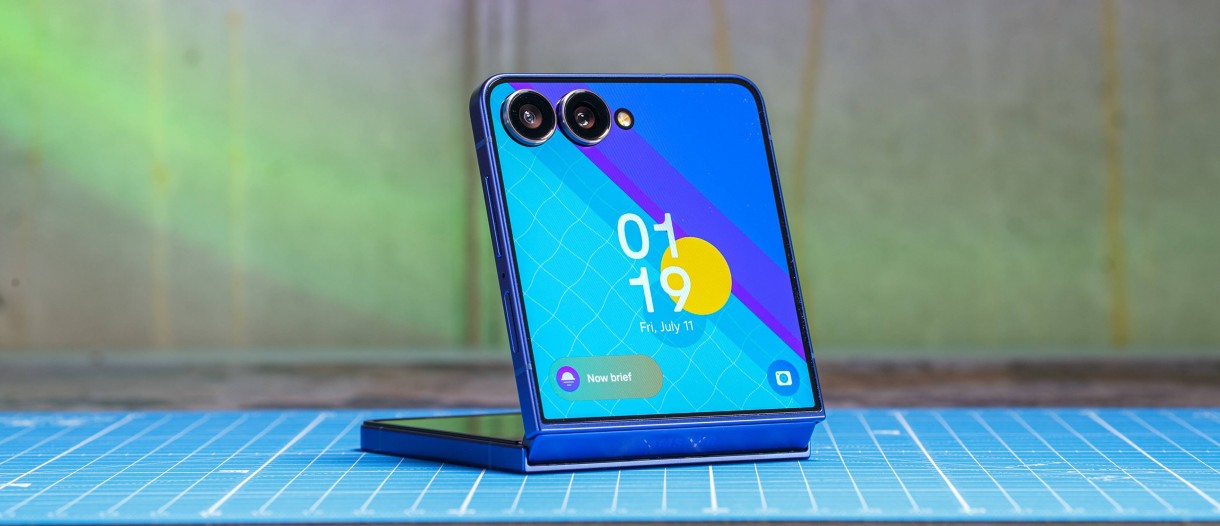
Galaxy Z Flip 7 is Samsung’s most refined clamshell — 6.9” display, 188g body, Exynos 2500 handling everything without drama, 4300 mAh battery that actually makes it through a full day, and 7 years of Android updates. If you want a foldable without gambling on a first-gen experiment, this is the safe bet.
Street price around ฿30,000–35,000 (~$857–$1,000 USD) depending on retailer. Not cheap, but not unreasonably priced either. If the budget’s there and you’re serious about a foldable — not just chasing a trend — it’s worth the money.
Samsung’s One UI is the best software skin in this category, and 7 years of support means you buy today and the phone stays relevant for years. The Gorilla Glass Victus 2 back looks premium but is slippery — budget for a case.
Why a clamshell foldable
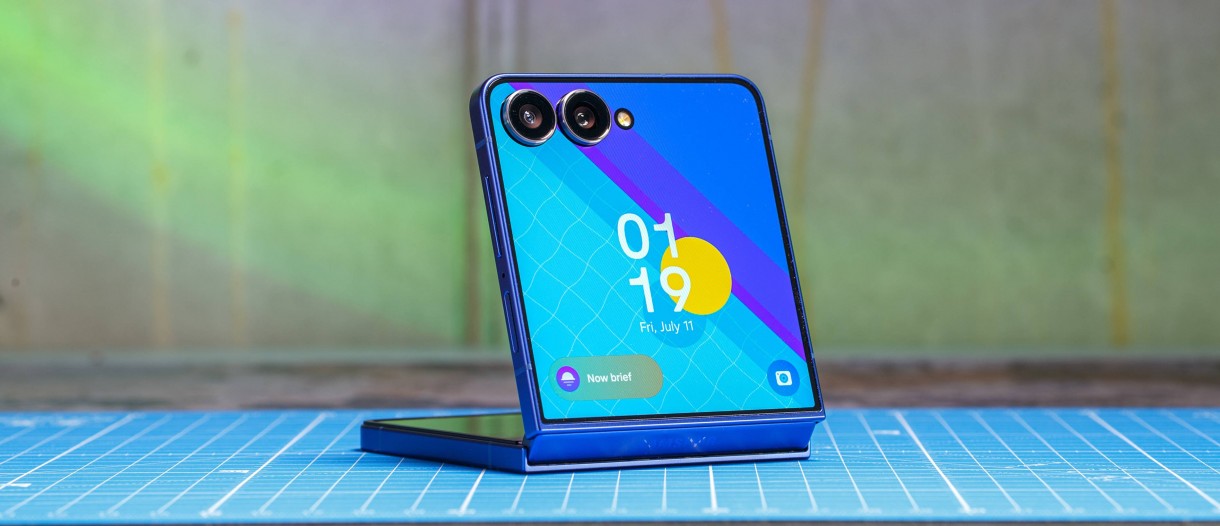
If you’ve been on a slab phone forever, you know the problem — the screen is huge, the phone barely fits in a jeans pocket, and even a quick coffee run needs a bag. Z Flip 7 solves that: unfold for a full 6.9” display, fold to pocket-size.
At 188g it’s legitimately light. Reviews consistently note the hinge is tighter than before — it takes real thumb pressure to open, which means it won’t fold shut in your pocket accidentally.
The tradeoff you have to accept: the inner display is plastic. It picks up fingerprints faster than glass. Most users just keep a small microfiber cloth nearby.
Where it sits in Samsung’s lineup
Galaxy Z Flip 7 is the “affordable” entry to Samsung Foldables — cheaper than Z Fold 7 which is built around that big inner display for productivity. Z Flip 7 targets people who want a cool form factor and a capable selfie setup. Fold it to half-open, prop it on a table, and shoot with the 50MP rear sensor — no tripod needed.
Within Samsung’s own range, Z Flip 7 sits well above the Galaxy A and M series: Exynos 2500 (3nm), 4300 mAh, Dynamic LTPO AMOLED 120Hz. The nice part is it doesn’t over-spec to justify the price — it gives you what you actually use every day.
The typical Z Flip 7 buyer: wants premium without paying Z Fold money, or wants a great selfie phone that doubles as a kickstand for video calls.
Z Flip 7 vs Z Flip 6
Looks similar outside, significantly better inside. The two biggest upgrades: Exynos 2500 (3nm) replacing Snapdragon 8 Gen 3, and battery jumping from 4000 to 4300 mAh.
| Factor | Galaxy Z Flip 6 | Galaxy Z Flip 7 |
|---|---|---|
| Main display | 6.7" | 6.9" |
| Display tech | Dynamic AMOLED 2X, 120Hz | Dynamic LTPO AMOLED 2X, 120Hz |
| Peak brightness | 2750 nits | 2600 nits |
| Chip | Snapdragon 8 Gen 3 | Exynos 2500 (3nm) |
| Battery | 4000 mAh | 4300 mAh |
| Rear camera | 50MP f/1.8 + 12MP | 50MP f/1.8 + 10MP |
| Weight | 185g | 188g |
| Approx. price | Discounted | Starting ~฿37,000 (~$1,057 USD) |
Battery is the clearest win — Z Flip 6 had you watching the battery gauge nervously by afternoon. Z Flip 7’s 4300 mAh plus Dynamic LTPO dropping refresh rate down to 1Hz (vs 10Hz minimum on Z Flip 6) makes a noticeable difference. Most reviews report making it through a full day without a midday charge.
The chip swap from Snapdragon to Exynos 2500 might look sideways on benchmarks, but in practice Exynos 2500 is a real step forward — Genshin Impact runs smoothly.
Z Flip 7 makes most sense for anyone coming from a Z Flip 6 who felt battery-anxious. This upgrade fixes that.
Does it fix Z Flip 6’s complaints?
If you’re on a Z Flip 6 and weighing the upgrade, here’s the honest breakdown:
✅ Battery dying too fast — fixed Z Flip 6’s 4000 mAh meant carrying a power bank everywhere. Z Flip 7’s 4300 mAh + Dynamic LTPO at 1Hz minimum means most reviewers report surviving a full day without plugging in at lunch.
✅ Cover display too small — partially fixed Z Flip 6’s 3.4” cover was mostly decorative. Z Flip 7 expands it to 4.1” edge-to-edge — reading messages and replying to chats is genuinely usable now. But most apps still aren’t optimized for the cover display, so you’ll still open the phone for anything real.
⚠️ Thermal throttling under gaming load — slightly better Exynos 2500 (3nm) runs cooler than Snapdragon 8 Gen 3, so the phone doesn’t heat up as fast. But the thin clamshell form factor limits thermal headroom — extended Genshin sessions still get warm.
❌ Crease down the middle — unchanged Still visible when viewing straight-on or at certain angles. It’s inherent to all current foldables, not a Samsung-specific problem. If the crease bothers you, don’t buy a foldable.
❌ Plastic inner display scratches easily — unchanged Ultra Thin Glass over plastic is still plastic. Press hard with a fingernail and you’ll leave a mark. No manufacturer has solved this yet.
❌ IP48 water-resistant but not dustproof — unchanged Z Flip 7 stays at IP48 — submersible to 1.5m for 30 minutes, but dust rating is only 4 (blocks particles over 1mm). Beach or desert trips require caution. iPhone and Galaxy S25 both get IP68.
Bottom line: the two biggest pain points (battery + cover display) are fixed. The fundamental foldable tradeoffs (crease, plastic screen, IP48) remain. If you can accept those, Z Flip 7 is a clear improvement. If you can’t, stick with a slab.
Real-world usage
Cover display + rear camera → better-quality selfies The surprising highlight: fold it shut and shoot selfies with the 50MP f/1.8 main sensor hands-free. Image quality is noticeably better than the 10MP front camera — larger sensor, better light intake.
Half-fold as a kickstand → video calls without holding the phone Prop a half-folded Z Flip 7 on any flat surface, open Zoom, done. No stand needed. If you’re on video calls all day, this alone changes the experience.
50MP f/1.8 + OIS → solid low-light shots The 1/1.57” sensor with OIS delivers clean shots in dim restaurants and evening settings. Not “point it at anything and win” but much better than you’d expect from a foldable.
4300 mAh + Dynamic LTPO → nearly all-day battery The number looks small, but when the display drops to 1Hz on static content, the battery feel changes. If you’re mostly sitting at a desk, you’ll make it through the day. Heavy users or travelers should still bring a power bank.
vs. the competition
| Factor | Samsung Galaxy Z Flip 7 | Google Pixel 9 Pro Fold | OnePlus Open |
|---|---|---|---|
| Launch price | ~฿37,000 (~$1,057 USD) (256GB) | ~฿39,000 (~$1,114 USD) | ~฿41,000 (~$1,171 USD) |
| Main display | 6.9" (21:9) | 7.6" (17.4:9) | 7.9" (17.6:9) |
| Chip | Exynos 2500 (3nm) | Google Tensor 4 (4nm) | Snapdragon 8 Elite (3nm) |
| Main camera | 50MP f/1.8 + OIS | 48MP f/1.7 + OIS + AI Magic Eraser | 48MP f/1.6 + OIS + Hasselblad |
| Battery | 4300 mAh (smallest) | 4650 mAh | 5910 mAh (largest) |
| Software updates | One UI + 7 yrs Android | Pure Android + 7 yrs | ColorOS + 4 yrs Android |
| Weight | 188g (lightest) | 312g | 246g |
| Durability | IP48 + Gorilla Glass Victus 2 | IP63 + Gorilla Glass Victus | IP64 + custom glass |
Z Flip 7 wins on portability — 188g is 60–80g lighter than the competition. Pulling it out of your pocket doesn’t feel like lifting a brick. If pocketability matters, this is the only foldable that actually delivers it.
Camera: Pixel leads on AI features — Magic Eraser and the computational photography suite are ahead of what Flip 7 offers. That said, Samsung’s Dual Pixel PDAF focuses faster, and for everyday portraits both phones produce genuinely good results.
Raw performance: OnePlus wins on paper — Snapdragon 8 Elite benchmarks higher. In practice, Exynos 2500 handles every task including heavy games without issue. The gap is real but not meaningful for most workloads.
Battery: OnePlus by a wide margin — 5910 mAh is two-day territory. Z Flip 7 needs a nightly charge. Dynamic LTPO helps, but it’s not a substitute. If you travel heavily and hate charging, OnePlus is the better call.
Updates: Samsung and Google tied at 7 years — OnePlus drops to 4 years, which is a real disadvantage for a long-term purchase.
Pros and cons
Pros
- Dynamic LTPO AMOLED 2X at 2600 nits — readable in direct sunlight, 21:9 ratio looks great both open and folded
- 50MP f/1.8 + OIS on the main camera delivers better low-light performance than expected for a foldable; 1/1.57” sensor is a reasonable size
- Exynos 2500 (3nm) handles everything including Genshin Impact without complaint
- 7-year update commitment — 3 years more than OnePlus, worth the long-term value
- 188g + IP48 + Gorilla Glass Victus 2 — for a foldable, that’s a solid physical package
Cons
- 4300 mAh needs a nightly charge; heavy users or travelers will still carry a power bank. Dynamic LTPO helps but doesn’t fully compensate
- The crease is visible and sits dead-center — most people adapt, some never do
- Cover display apps are mostly unoptimized; you’ll open the phone anyway for most tasks
- Price approaching ฿40,000+ (~$1,143 USD) puts it close to Z Fold territory — make sure “clamshell” is what you actually want, or check if a discounted Z Flip 6 makes more financial sense
Hidden costs
Z Flip 7 isn’t a one-and-done purchase. The real cost of ownership is higher than the sticker suggests.
Inner display repair — factory Samsung screen replacement runs ฿15,000–18,000 ($429–$514 USD); aftermarket is ฿5,000–8,000 ($143–$229 USD) but color accuracy and durability suffer. Screen protector for the folding display: ฿2,000–3,500 (~$57–$100 USD) per sheet.
Samsung Care+ — roughly ฿300–400/month ($8–$11/month). Looks small until you add up 2–3 years: ฿7,200–14,400 ($206–$411 USD). Without it, post-warranty repairs are brutal.
Case + back film — Victus 2 glass looks great and scratches. Budget ฿800–2,500 ($23–$71 USD) for a case and ฿300–600 ($9–$17 USD) for a back film. Cheaper than paying for repairs.
Hinge repair — a broken hinge alone runs ฿8,000–12,000 ($229–$343 USD). Hinge plus display simultaneously: ฿20,000+ ($571+ USD).
Accessories — 4300 mAh isn’t a lot. A decent power bank for heavy days runs ฿2,000–4,000 (~$57–$114 USD).
Depreciation — after 3–4 years expect ฿18,000–22,000 ($514–$629 USD) on resale, roughly 50–55% loss. Buy at ฿40,000, sell at ฿20,000 three years later = ฿6,700/year ($191/year) just in depreciation, before accessories.
For most people who just need a reliable daily driver, Z Flip 7 is an expensive way to get there. But if the clamshell form factor is genuinely what you want and the budget is there — go for it. If you’re on the fence, a discounted Z Flip 6 carries the same fundamental risks at a lower price point.
Who should buy, who shouldn’t
Buy it if:
You’re into cutting-edge hardware and price isn’t the primary filter — a clamshell foldable makes every slab phone feel dated. 6.9” display that pockets, 50MP camera with OIS, and the sheer satisfaction of owning something genuinely different all have real value.
You make content or need to look the part — Z Flip 7 reads as jewelry. Gorilla Glass Victus 2 back, clean lines, premium feel in hand.
Skip it if:
You’re a student or budget-constrained — total cost of ownership is high. ฿40,000+ purchase, 3-year depreciation to ฿20,000, plus accessories, means you’re spending a lot for a phone.
You need durability — the inner display is softer than glass. If you don’t upgrade phones often, the anxiety around scratches and cracks will wear on you.
Z Flip 7 is priced right for what it is, but Z Flip 6 at a discount is a smart alternative. Same fundamental risks, lower entry price — you don’t always need the latest.
Verdict
Galaxy Z Flip 7 is the best clamshell foldable Samsung has made — 188g, premium build, tighter hinge, and the two biggest Z Flip 6 complaints (battery and cover display) are meaningfully addressed. If you want a selfie setup with a built-in kickstand, a beautiful design, and 7 years of software support, this delivers.
The other side: plastic inner display is still scratch-prone, durability still trails a slab at this price, and once you cross ฿40,000 (~$1,143 USD) you need to be honest about whether “clamshell” is worth that premium over a Galaxy S25 or even a discounted Z Flip 6.
Z Flip 7 is right for two types of buyers: people who genuinely want the latest clamshell foldable and have the budget for it, or people who’ve been waiting for a foldable that’s mature enough to trust. If you just want good value for money, the Z Flip 6 at today’s discounted price is probably the smarter play — same risk profile, much lower cost.
Not for everyone. But if you know you want it, it’s worth it.
Samsung galaxy Z Flip7 5G(Ai) แรม12 รอม256 เครื่องใหม่ เครื่องศูนย์ไทยแท้ ประกันศูนย์ตามล็
🛒 View price on ShopeeNote: this article contains affiliate links.