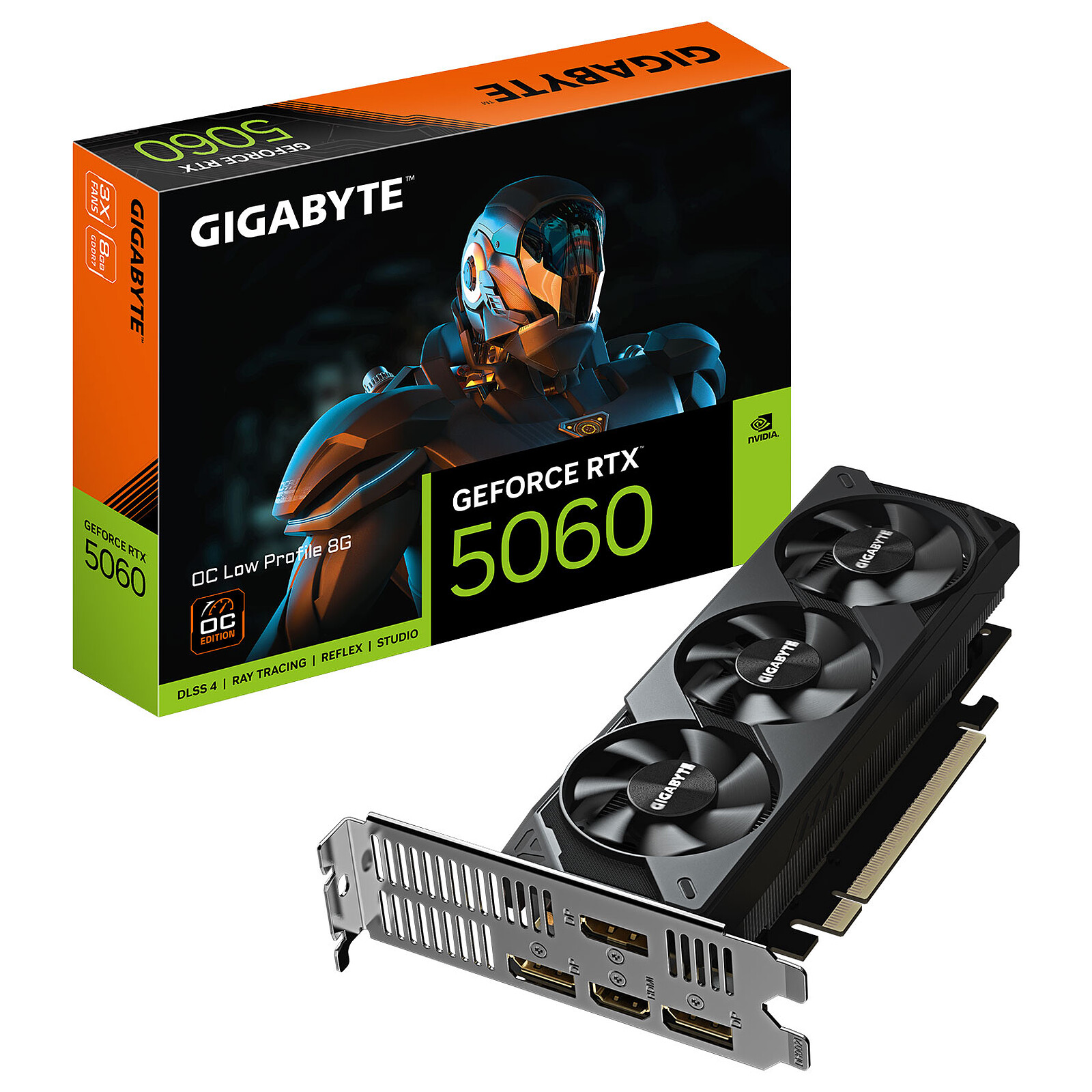
TL;DR
- Best for: 1080p–1440p gamers with a ฿10,000–12,000 (~$280–340 USD) budget, upgrading from GTX/RTX older generations
- Highlights: GDDR7 bandwidth 448 GB/s, low 145W TDP, DLSS 4, $299 USD launch price
- Watch out for: 8GB VRAM may feel tight in 2–3 years, 1440p requires some settings reduction in demanding titles
Quick Take: RTX 5060 Is a Lower-Mid-Range Card with Next-Gen AI and Ray Tracing
The RTX 5060 ships with the GB206 chip on a 5nm process, 8GB GDDR7, 120 Tensor Cores for AI workloads, and 30 RT Cores for ray tracing — spec sheet says comfortable 1080p at high settings.
The card draws 145W TDP while boost clock reaches 2497 MHz. Memory bandwidth sits at 448.0 GB/s, which is solid for mainstream gaming.
At $299 USD launch (~฿12,000), the value proposition isn’t dramatically better than when the RTX 4060 first launched. For 1440p gaming, expect to dial settings down in some titles.
Product Shots
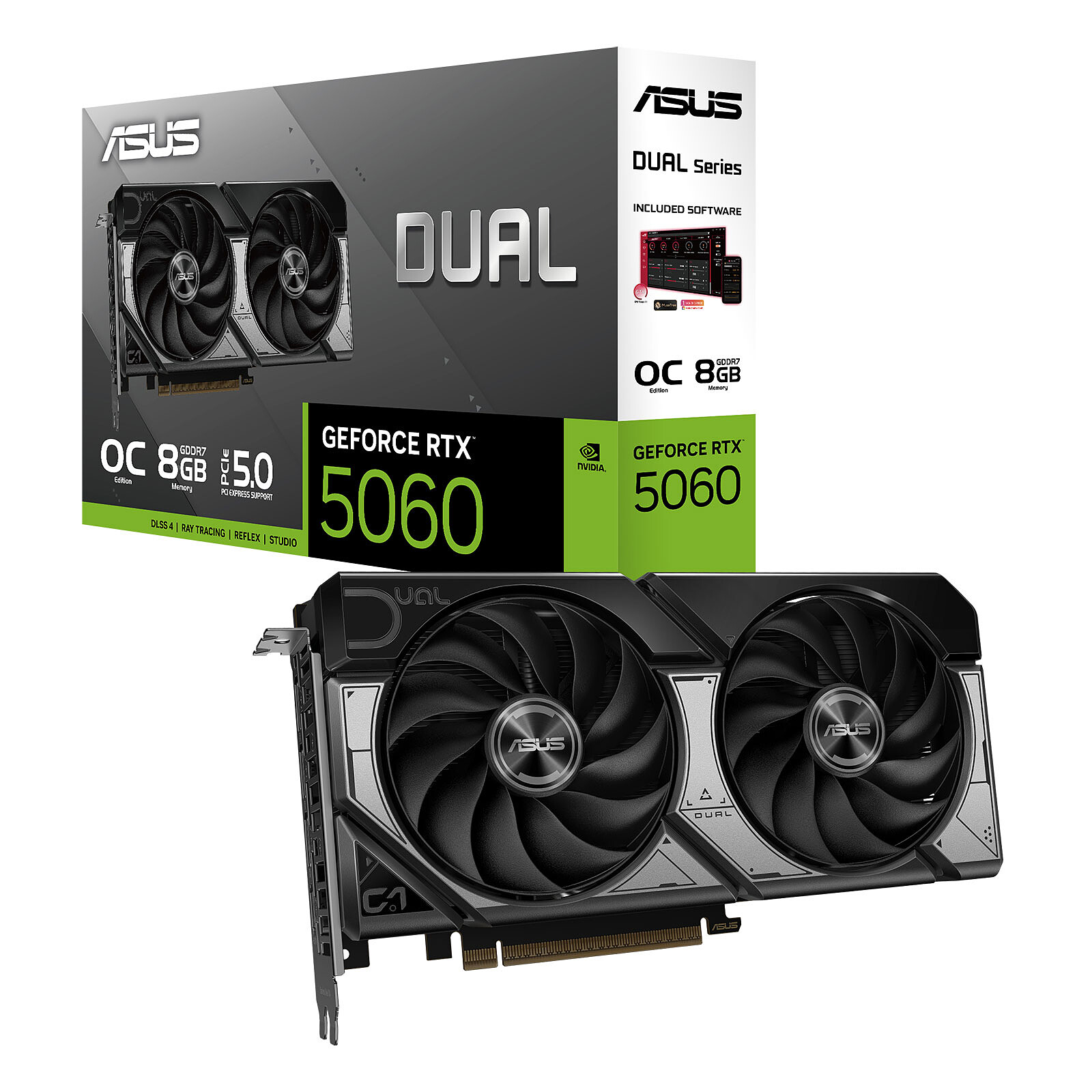
The RTX 5060 uses the GB206 die at 181 mm², fabbed on TSMC 5nm. It carries 30 RT Cores and 120 Tensor Cores, pushing hard on AI and ray tracing workloads.
The headline spec is GDDR7 memory — the first in the 60-series — delivering 448.0 GB/s bandwidth. The bus is only 128-bit, but the 1750 MHz memory clock compensates.
The card looks unremarkable from the outside, but the internals are interesting — particularly the 32MB L2 cache, a jump up from the previous generation.
Why Upgrade Your GPU Now
Older cards like the GTX 1660 or RTX 3050 are showing their age against modern titles with full ray tracing. Running Cyberpunk 2077 or Alan Wake 2 at 1080p medium barely hits 30–40 fps — that’s not playable for anything serious.
For anyone experimenting with AI art or video editing, the 120 Tensor Cores in the RTX 5060 make a real difference. Compared to older cards with no AI acceleration, render times are noticeably shorter.
The inflection point is clear: games are now regularly demanding 10–12GB VRAM. Cards with only 4–6GB are bottlenecking at 1440p or with high-quality texture packs.
Where It Sits in NVIDIA’s Lineup
The RTX 5060 is the entry point for the RTX 50 series — GB206, 3840 shaders, fewer cores than the tiers above, but still gets GDDR7 like the rest of the stack. It’s designed to bring the latest technology to buyers with tighter budgets.
The 145W TDP means it works with older PSUs without needing an upgrade. That’s a meaningful benefit for anyone coming from GTX series or RTX 20/30 lower-end cards.
This slot makes sense for 1080p–1440p players who don’t need 4K flagship performance. At $299 USD launch, it’s far more accessible than the RTX 5070/5080/5090.
vs. Previous Generation
| Factor | RTX 5060 | RTX 4060 |
|---|---|---|
| Cores | 3840 | 3072 |
| Memory | 8GB GDDR7 | 8GB GDDR6 |
| Process | 5nm | 5nm |
| TDP | 145W | 115W |
| Launch Price | 299 USD | 299 USD |
The RTX 5060 bumps cores from 3072 to 3840 and upgrades to GDDR7, which meaningfully increases bandwidth. The trade-off is a 30W higher TDP at 145W.
Launch price holds at $299 USD, but you’re getting ~25% more shaders and significantly faster memory for the same money.
The upgrade is worth it: 30W more power draw in exchange for a clear performance gain. That said, if you already own an RTX 4060, the gap isn’t wide enough to justify upgrading. Coming from GTX or RTX 30 lower-tier? That’s a different story.
Features That Matter in Practice
DLSS 4 is a genuine game-changer. Heavy titles like Cyberpunk or Alan Wake 2 run noticeably smoother without sacrificing image quality.
Ray tracing with 30 RT Cores makes reflections feel realistic in racing games or RPGs with water and glass surfaces — it shifts the atmosphere of those games entirely.
AI workloads — the 120 Tensor Cores help across the board, from video editing in Premiere to upscaling old photos. The new encoder also makes streaming smoother.
These features translate to real, felt improvements in daily use, especially for AAA gaming or content creation work.
vs. Competitors
| Factor | RTX 5060 | RX 7600 XT | Arc B580 |
|---|---|---|---|
| Launch Price | 299 USD | 329 USD | 249 USD |
| VRAM | 8GB GDDR7 | 16GB GDDR6 | 12GB GDDR6 |
| TDP | 145W | 190W | 190W |
| Ray Tracing | RT Cores 30 | RDNA 3 | Xe-HPG |
| DLSS/FSR | DLSS 4 | FSR 3.1 | XeSS |
The RTX 5060 sits mid-pack on price but leads on technology — DLSS 4 and updated RT Cores put it ahead of both AMD and Intel for ray tracing fluidity.
The RX 7600 XT offers the most VRAM at 16GB, which matters for memory-hungry titles, but its 190W TDP is noticeably higher. The Arc B580 is the cheapest option and still relatively new in the market.
If ray tracing in modern games is your priority, the RTX 5060 wins. If you mostly play older titles or need to stretch every dollar, the Arc B580 is compelling.
Pros & Cons
Pros
- +GDDR7 8GB with 448.0 GB/s bandwidth — fastest in class at this tier
- +145W TDP — more power-efficient than AMD and Intel competition
- +TSMC 5nm die — good performance-per-watt
- +PCIe 5.0 — forward-compatible with new motherboards
Cons
- −128-bit bus width caps memory performance ceiling
- −$299 USD launch price is steep for an entry-level card
- −8GB VRAM may not keep up with AAA titles in 2–3 years
- −3840 core count isn't impressive for a new-generation release
The RTX 5060 is the right fit for buyers who want current-gen technology without paying flagship prices. The 8GB VRAM ceiling is the main long-term concern for demanding workloads.
Hidden Costs
The RTX 5060’s 145W TDP is manageable, but if you’re running an older 500W PSU, you may need to upgrade — you need headroom for the CPU and rest of the system.
The card runs PCIe 5.0 x8, so older motherboards won’t saturate the full bandwidth, though it runs fine in compatibility mode. GDDR7 does run slightly warmer, and some cases may benefit from an extra fan.
If the machine is 3–4 years old, budget an extra ฿3,000–5,000 (~$85–140 USD) for a new PSU. On a newer system, it drops straight in — significantly cheaper to integrate than higher-tier cards.
Who Should Buy, Who Shouldn’t
Buy it: Gamers primarily on 1440p, budget ฿10,000–12,000 (~$280–340 USD), want better performance than an RTX 4060 without paying xx70-series prices. Upgrading from a GTX 1060 or RTX 2060? This is a strong jump.
Skip it: Regular 4K gaming — 8GB GDDR7 won’t be enough. Already on an RTX 4060 Ti — the performance gap isn’t there. Content creators rendering 4K video frequently should look at the RTX 5070 instead; memory bandwidth at 448.0 GB/s still leaves headroom on the table.
The sweet spot is a 1440p 144Hz monitor. For smooth 4K, you’re paying for the tier above.
Conclusion
The RTX 5060 makes sense for anyone upgrading from GTX or older RTX hardware who wants smooth 1440p gaming. At $299 USD, it sits in a reasonable price range for a mid-range card.
If you already own an RTX 4060 Ti, the upgrade math doesn’t add up — the gap isn’t significant enough. For heavy content creation work, the RTX 5070 is the better call.
This is a solid pick in the ฿10,000–12,000 (~$280–340 USD) range if you want real performance without overspending. Just don’t go in expecting 4K brute-force — memory bandwidth at 448.0 GB/s still has its limits.
FAQ
Can the RTX 5060 handle 1440p? Yes, but expect to reduce settings in demanding AAA titles. With DLSS 4 enabled, 1440p gameplay becomes noticeably smoother. It’s best suited for 1440p 60–100fps rather than 144fps+ competitive play.
Is 8GB VRAM enough in 2026? For most current games, yes. But newer AAA titles are starting to demand 10–12GB. Over a 3–4 year horizon this may feel tight. If you’re worried, the RX 7600 XT offers 16GB at a similar price point.
How different is the RTX 5060 from the RTX 4060? Cores up 25%, memory upgraded to GDDR7 (~50% more bandwidth), DLSS 4 is a clear step forward. The trade-off is 30W more TDP. If you already own an RTX 4060, the upgrade isn’t compelling. Coming from GTX or RTX 30 series, it’s a strong improvement.